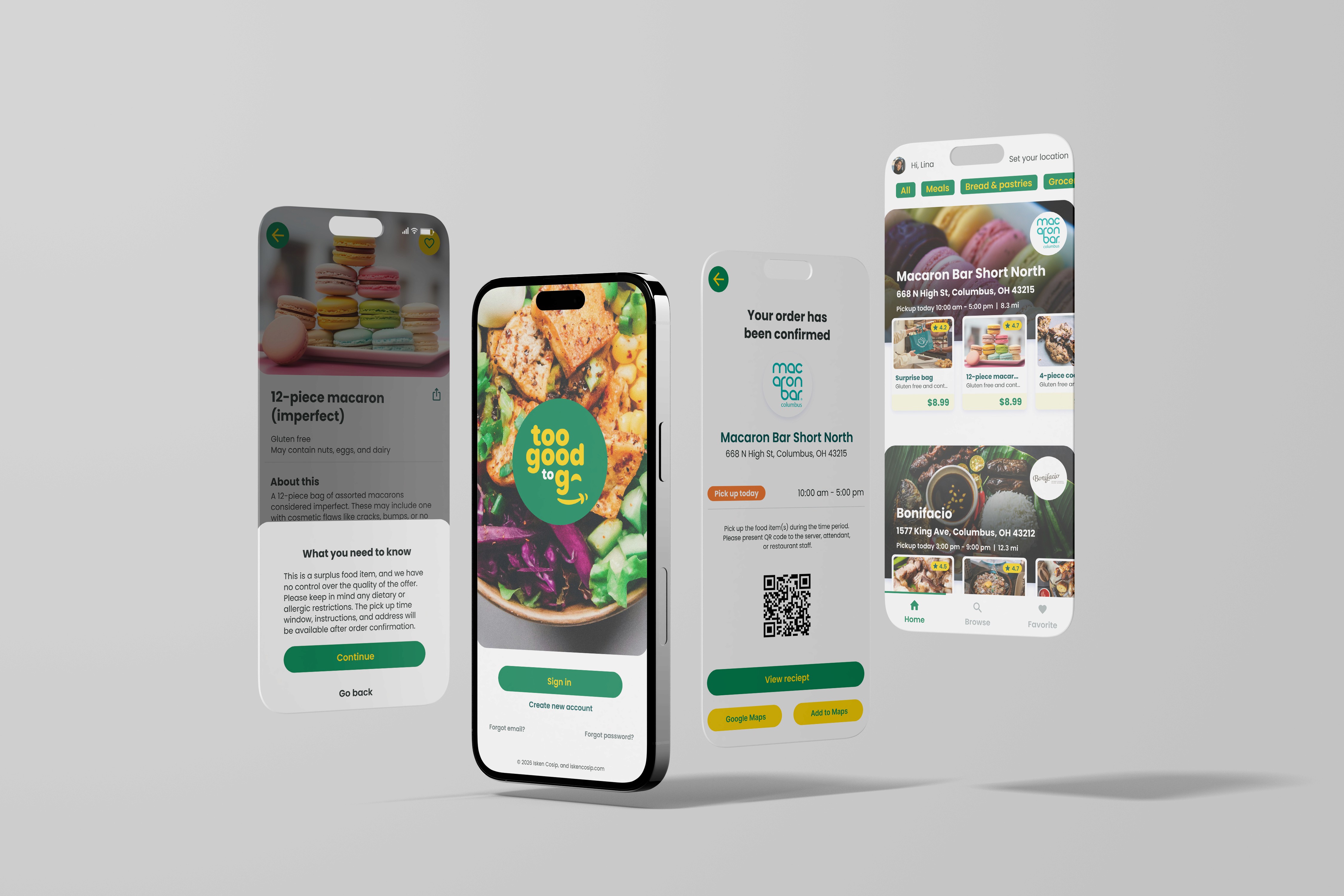
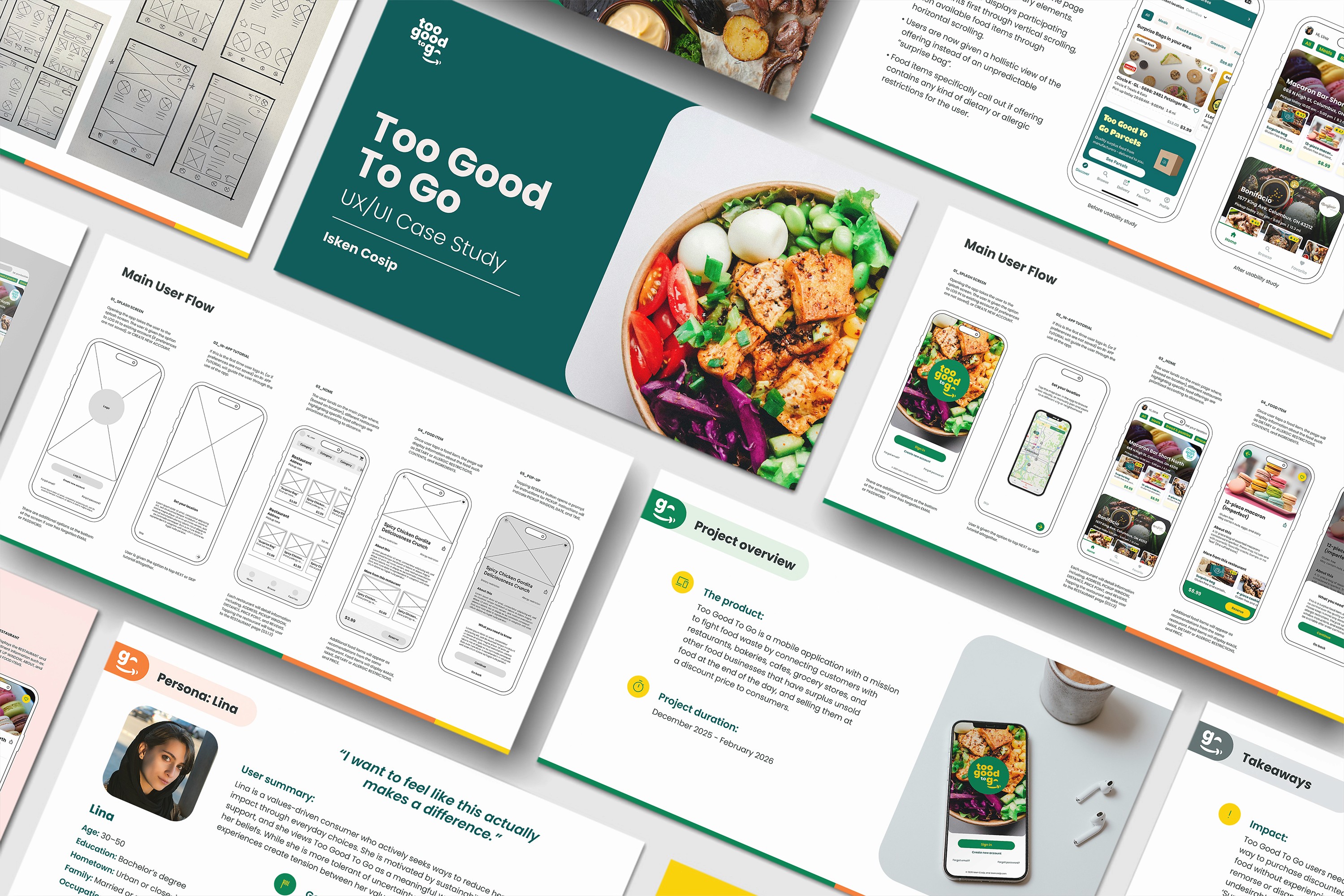
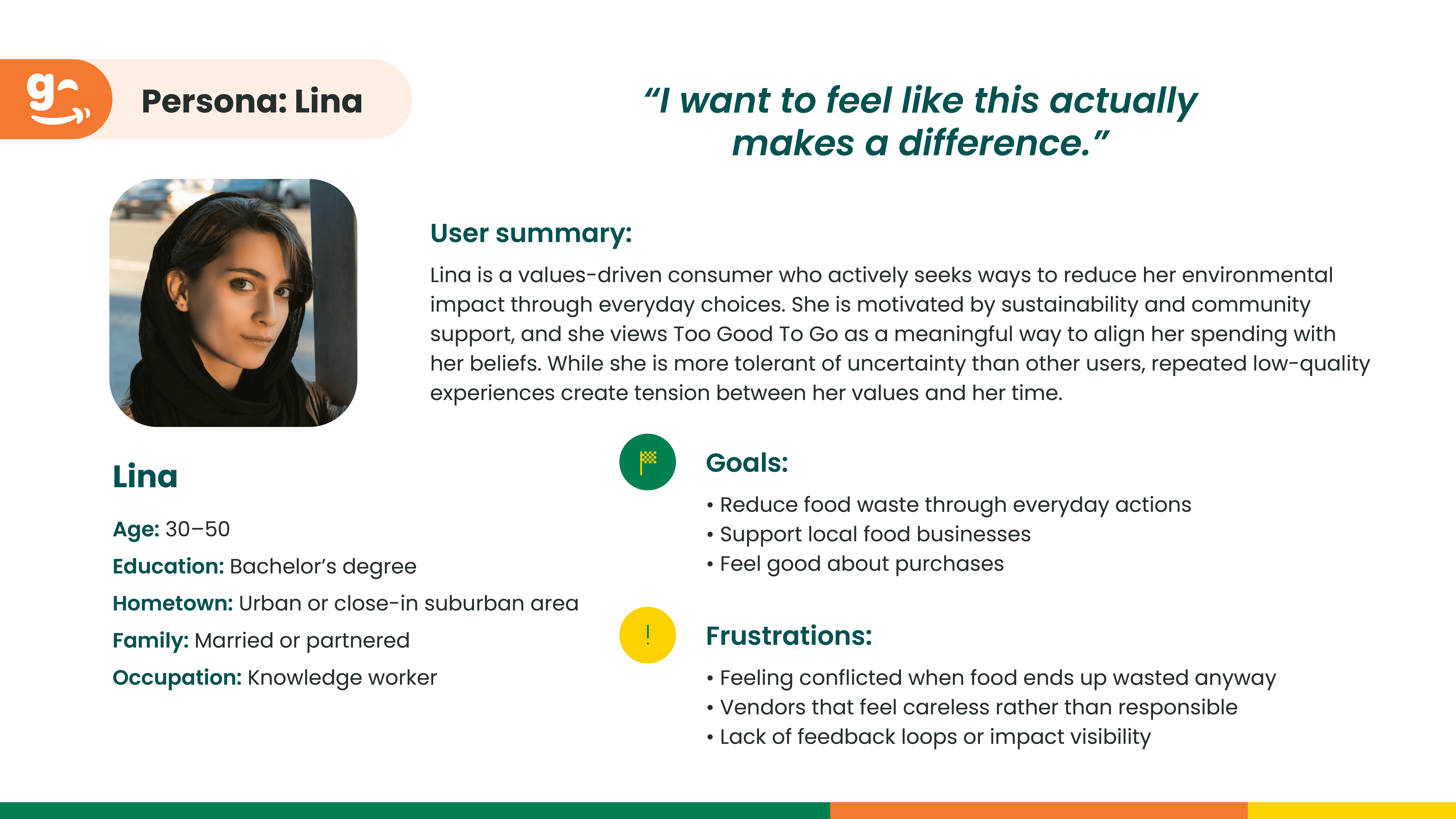
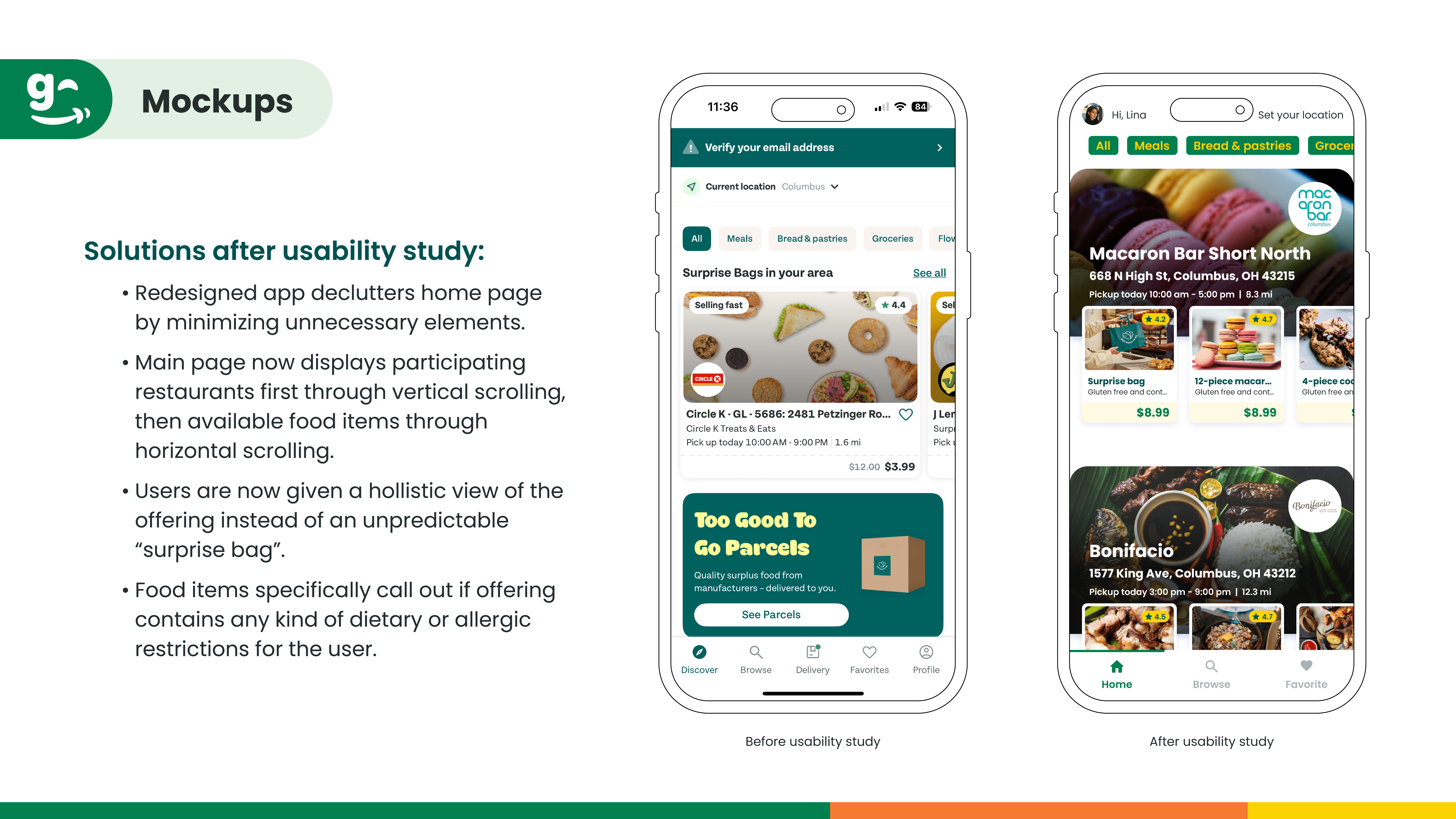
Some of the key issues I identified in the existing app: food offerings lack transparency and clarity, leaving users unsure of what they're purchasing. Certain locations have used the app to drive in-store traffic rather than genuinely fighting food waste. A default "Selling Fast" callout creates false urgency that's deceptive to the user. Food items also fail to communicate dietary or allergic restrictions, a critical gap for many users.
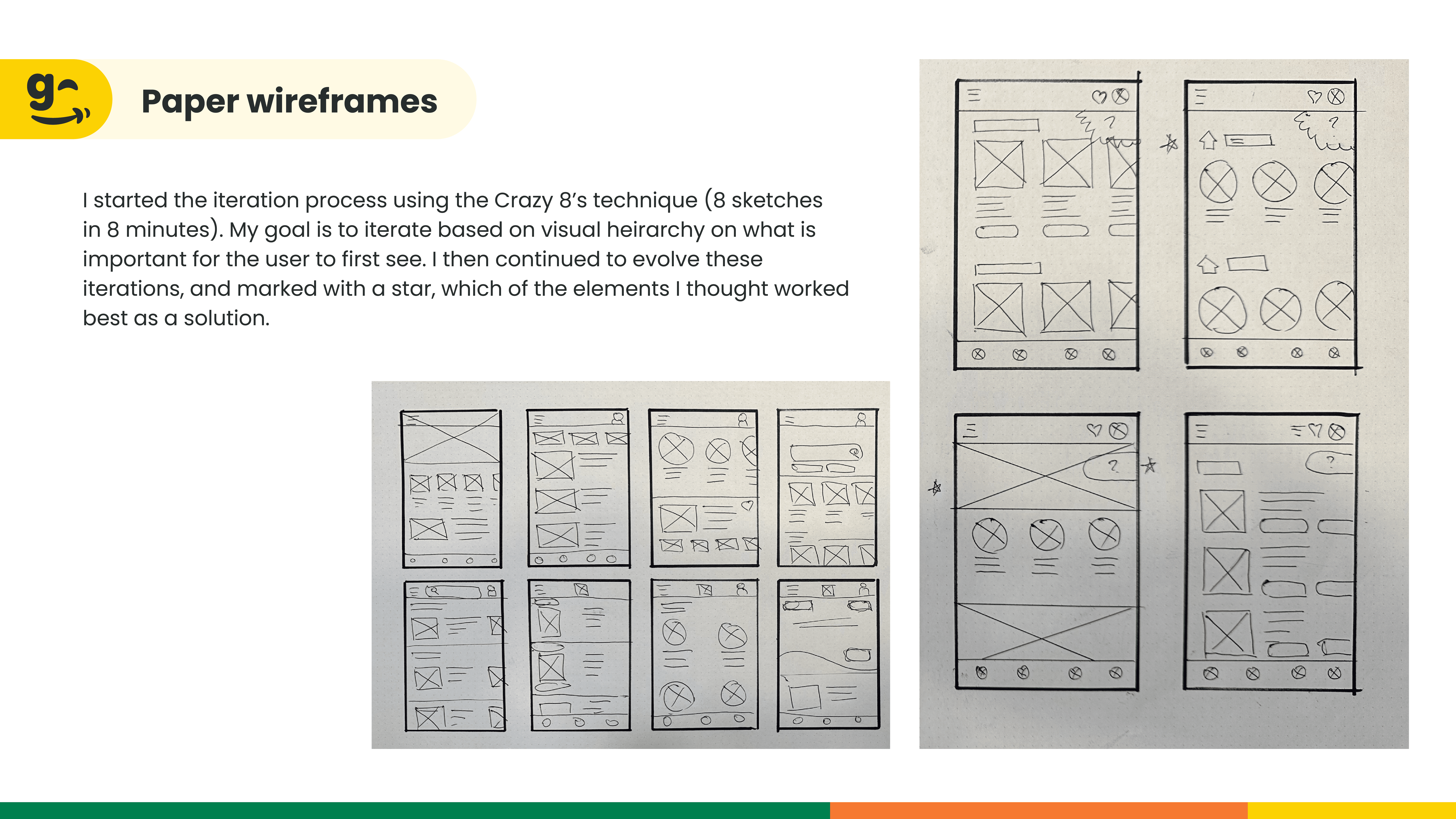
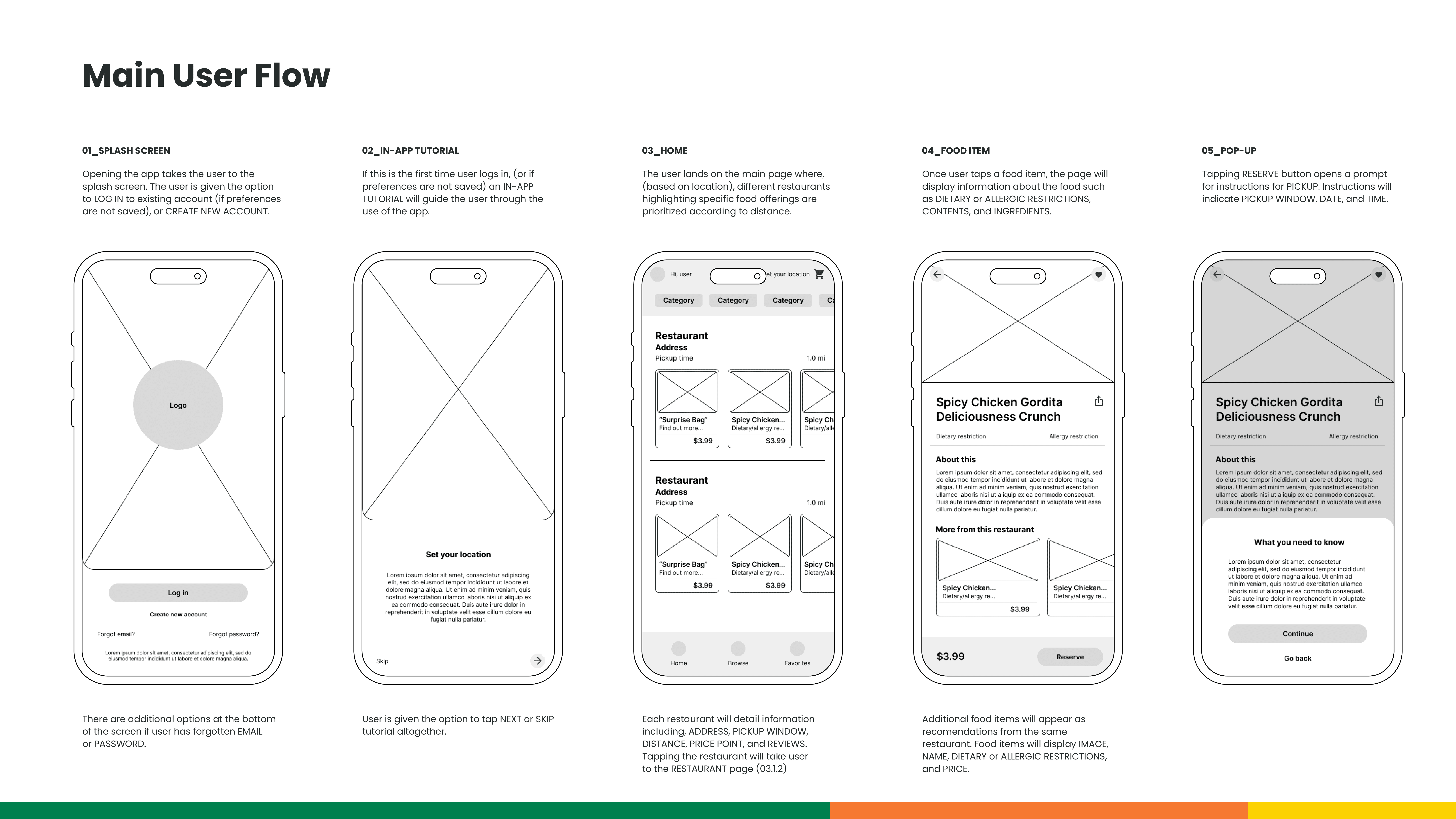
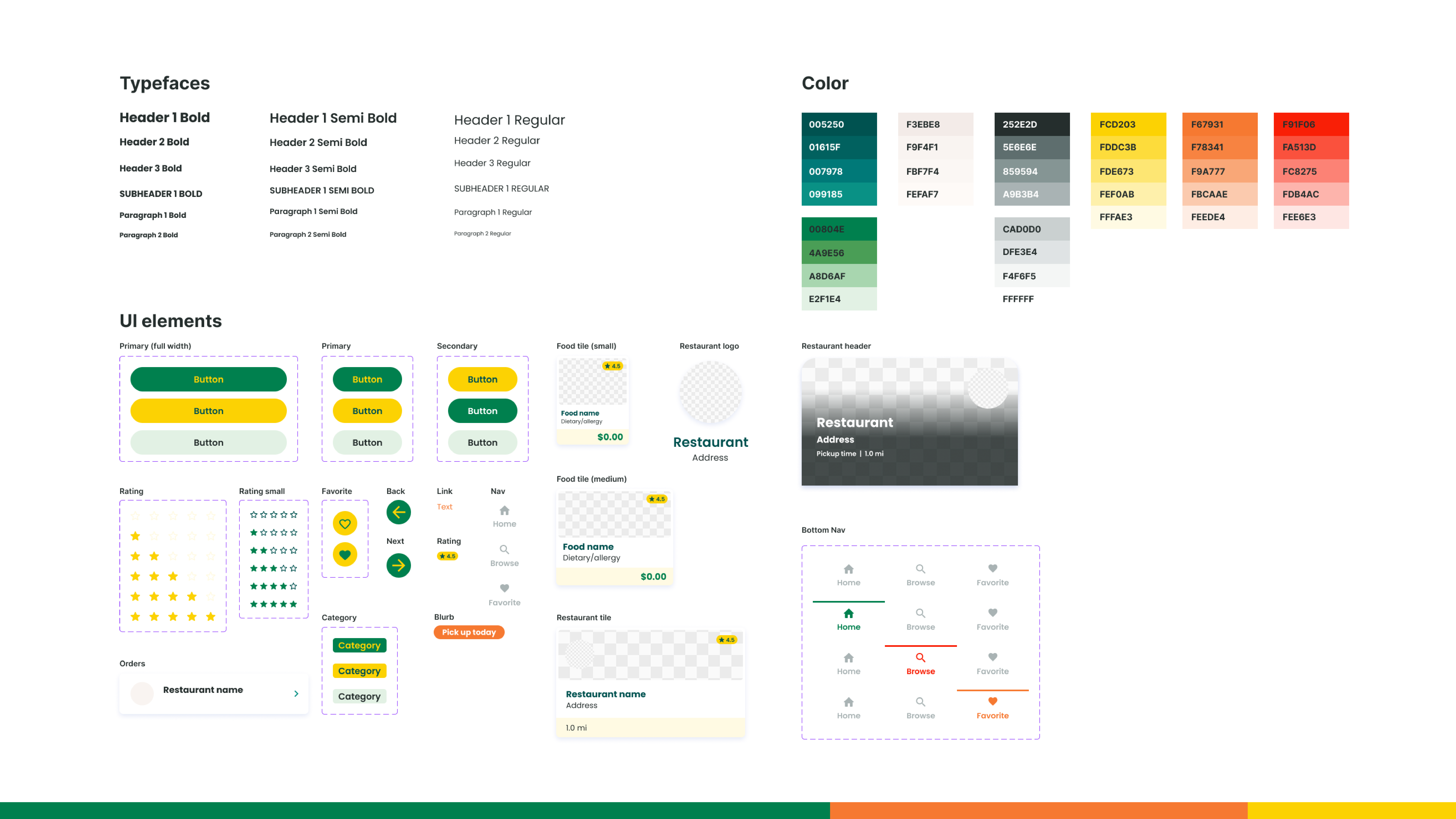
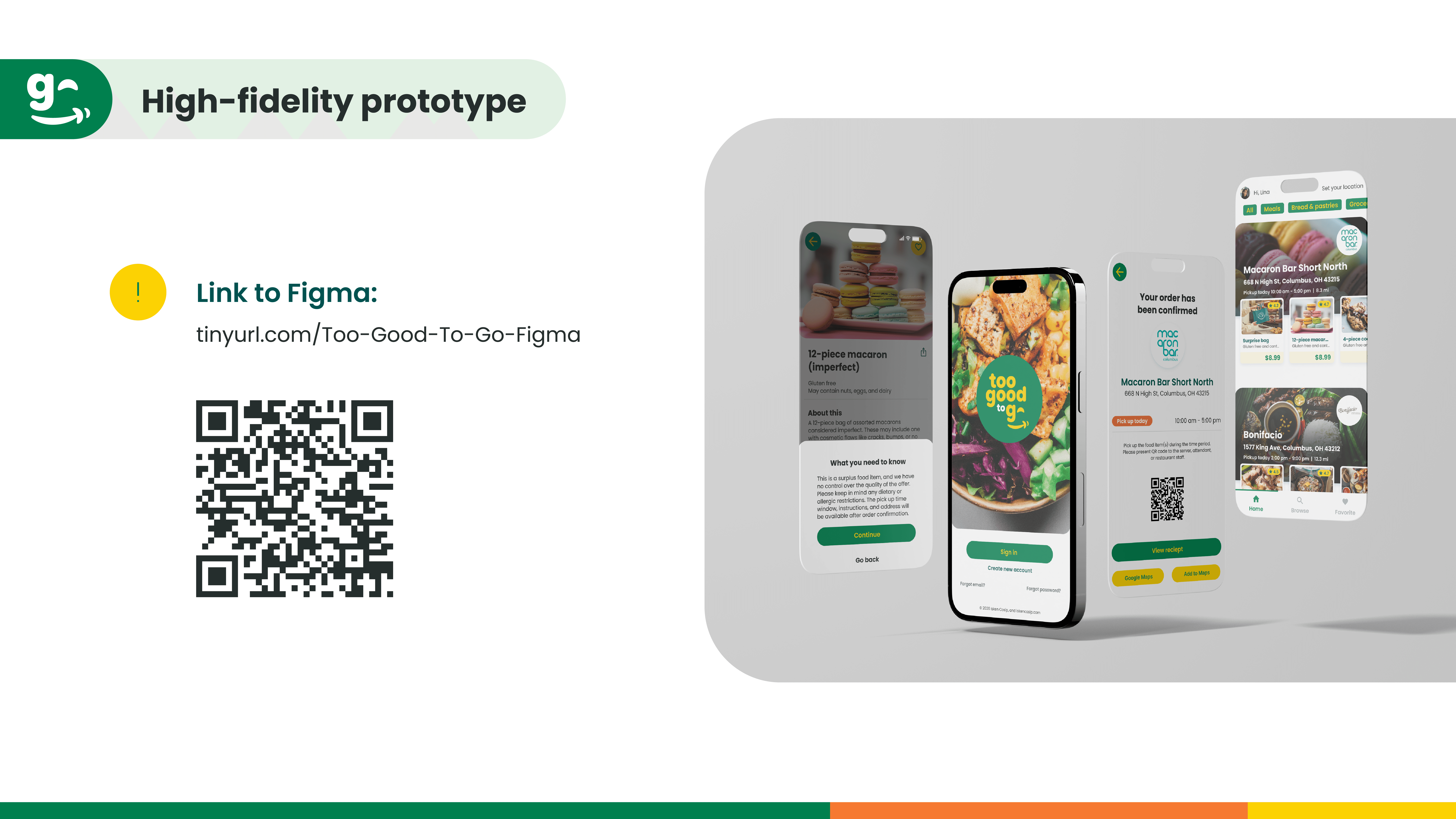
I addressed these issues by putting myself in the user's shoes and designing an experience that promotes clarity and informed decision-making. Solutions include offering specific food items that remove the guesswork, while keeping the Surprise Bag as an alternative for the adventurous user. The "Selling Fast" callout was removed in favor of honest, transparent information. Dietary and allergic restrictions are now clearly surfaced at the point of decision. Research was informed by AI-assisted competitive analysis and synthesized user scenarios to identify and prioritize key pain points.


Too Good To Go users need a reliable way to purchase discounted surplus food without experiencing buyer's remorse or disappointment from undesirable, inedible, or unsuited Surprise Bag contents. The current low-transparency model undermines user trust and long-term retention, despite the app's powerful environmental mission.
To redesign the Too Good To Go experience to increase user trust and minimize disappointment by introducing features that provide predictable value assurance and essential content visibility, while keeping the Surprise Bag as an additional option for the adventurous user.
Next projects.
(2008-26©)